Wake Forest UniversitySearchDirectoriesHelpSite MapHome
Window on Wake Forest
Shannon Gilreath

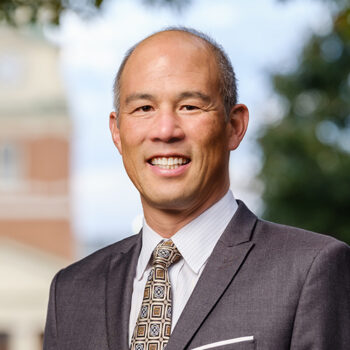
Shannon Gilreath, Wake Forest Fellow for the Interdisciplinary Study of Law, is nationally recognized as a leading scholar on issues of equality, sexual minorities and constitutional interpretation.


Free speech and hate speech

Shannon Gilreath on regulating 'anti-identity' expressions against the 'have-nots' of society

Shannon Gilreath recently organized a symposium of national and international scholars on the topic of “Equality-based Perspectives on the Free Speech Norm,” hosted by the Wake Forest Law Review.

Many people think of the First Amendment right to free speech as being sacrosanct. Your recent work suggests that we may need to regulate the right to free speech in certain situations. Where do you see flaws in the way this amendment is applied?

There are times when certain groups of people are subordinated as less important than other groups through language. This language then finds protection under the First Amendment. In a system of free speech committed to equality, a distinction must be made between speech that aims to foster genuine political debate and speech that aims to silence and demoralize.

With the addition of the Fourteenth Amendment, the Constitution guaranteed equality — facially, at least. A constitutional commitment to equality means that certain people cannot be forced into a caste system — into an existence as second-class citizens — because powerful people regard them as somehow less valuable. Using the First Amendment to shield speech that creates or reinforces subordination treats the Fourteenth Amendment and equality as if they don't matter. I see this as highly problematic.

Faculty Q and A

Can you give an example of this?

Sure. The type of speech that I am most interested in is what I deem “anti-identity” speech — speech that defines people into groups based on certain identity traits and then uses those traits and group associations as a basis for subordination. We might colloquially call it “hate speech,” but I believe the problematic category of speech is actually broader than the individualized name-calling or epithets we usually associate with hate speech. Examples from recent lawsuits include public high school students wearing T-shirts that read, “Be Happy, not Gay” and “Homosexuality is Shameful.” These are exactly the sorts of expressions at which my theory is aimed. This speech is not trying to promote discussion but is attacking identity. We could call it “cold” hate speech. Its dressed-down, almost civil tone makes it less recognizable, less shocking, and thereby more insidious. These are the very foundational messages, often masquerading as political debate, that must take root before there can be swastikas or burning crosses or blatant incitements to murder.

In the above example, a student wearing an anti-gay T-shirt might claim First Amendment protection. But, you would argue that the fact that this student is attacking the gay identity trait from the more powerful social position of not being gay is important in considering whether the shirt should be allowed in school.

Exactly. Equality in this country cannot be understood separate from an understanding of power and how power operates to create and then to maintain a caste system where there are identifiable oppressors and oppressed classes. My work on free speech says we have to take power and hierarchy into account as they really exist in people's lives, as opposed to abstract notions of these things that you get in law professor fantasyland. A gay youth subjected to anti-identity speech in school experiences fear, shame and discomfort that prevents him or her from receiving an education experience equal to that of heterosexual students.

The truth is that the people in power always have rights. Defenders of an absolute right to free speech are quick to point out that the speech of Nazis or Klansmen or misogynists or homophobes must be protected because it is simply the price that must be borne to ensure that political speech remains free and unfettered. How convenient that this price is paid disproportionately by the people who are not making the rules. Something is wrong with that. Free speech absolutists transform the actual harm and injury done by anti-identity speech to its targets into mere “hurt feelings” or offense. For the powerful, whose identity is already protected and reinforced through law, free speech amounts to an entitlement to have things exactly the way they want them. My theory of free speech, building on the work of many others, is aimed at exposing this fallacy and offering a workable equality-based alternative.

By way of background, what did the framers of the Constitution intend when they developed the provision protecting free speech?

That's a very good question and one for which I'm not sure that I have a concrete answer. What is clear is that the “have-nots” (blacks and women, for example) were left in the same position they were in before the Constitution. In a myriad of ways, the speech of the Founders depended on the silence they imposed on the people they conspired to render legally invisible. Language can be used to illuminate, to educate and to promote understanding. But language can also be used to perpetuate ignorance and inequality and to coerce others not to rebel. Sadly, American history is replete with episodes in which language has been used by powerful people to provoke fear and hatred of a target group. This is how language is predominately used against minorities, gays and lesbians today. Nevertheless, society is told that speech used in this way is worthy of protection because it is a part of the great marketplace of ideas.

What is the marketplace of ideas?

The marketplace of ideas is an analogy used to describe our free speech system. It assumes, either implicitly or explicitly, that there are no false ideas, only ideas to be picked or chosen, as one would select apples at a market. There are good apples (fairness and civility; civic respect and political correctness) and bad apples (bigotry, hate, malevolence). Presumably, the consumer may choose freely, and presumably he will more often than not choose the good apples, eventually marginalizing the purveyor of bad apples or driving him from the market altogether.

And you don't think that this is an accurate comparison.

The analogy does not account for the monopolist. The very purpose of anti-identity speech is to monopolize the debate to the exclusion of the targeted group. So, a better analogy would be a marketplace where no blacks or gays or women are allowed to shop. When they try to enter they are driven away by vicious, dehumanizing verbal attacks. When the attackers see that the law offers no response, their attacks grow more vicious and likely physical.

Also, ideas are not apples. There are false ideas. In the American democratic order, we have determined that the equality of every person is a paramount principle — perhaps the ultimate principle of ordered liberty. Equality is a fundamental right of every citizen. Thus, expression that is targeted to undermine equality, to subjugate an individual or group purely because of group identity, and to exclude the victim from meaningful, equal citizenship, is — constitutionally speaking — false.

What is essential to determining how free speech should work?

Understanding that words do not operate in a vacuum, but instead are plugged in to a social context, is of paramount importance to any equalitarian theory of speech. Context often determines when words are words only and when they constitute actions — dehumanization, degradation and subordination. Words can constitute subordination through dehumanization of a target, a process I define as the transformation of someone first into some"thing" and finally into no"thing". Dehumanization and its attendant subordination are real and they happen most often to stigmatized people.

So, a regulated right to free speech can be applied and still protect the rights of all.

Yes, and the most reasonable way to do this is to admit that anti-identity expressions offend the equality norm and can thereby be restricted consistent with the First Amendment free speech norm. An equality approach to free speech recognizes that there is another constitutional principle, that of equality under the Fourteenth Amendment, which should be included in the analysis. It's an altogether simple and reasonable demand.


Read more Faculty Q&As »


--
Wake Forest
Wake Forest University • Winston-Salem, North Carolina • Information: 336.758.5000 | Feedback