Wake Forest UniversitySearchDirectoriesHelpSite MapHome
Window on Wake Forest
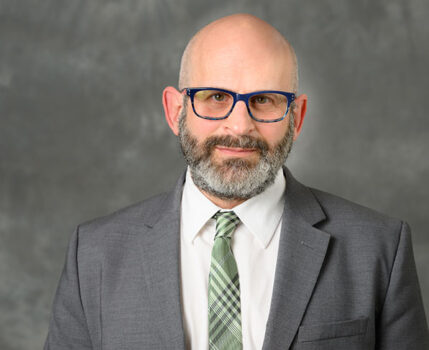
Peter Siavelis

Students in professor Peter Siavelis's classes learn about Latin-American government and comparative politics.


'Pathways to Power'

Peter Siavelis looks at the messy process to select candidates in Latin America, and the U.S.

Associate Professor of Political Science Peter Siavelis recently published a new edited book, “Pathways to Power.” Last summer, he was invited by Chile's governing coalition to talk with politicians about strategies for that country's 2009 elections. He shares insights into the politics of Latin America and what does and doesn't work in the U.S. election process.

Your book, “Pathways to Power,” looks at how candidates are selected to run for office in Latin America. What is the importance of this research?

Elections, political parties and legislatures are well studied in Latin America, but the process of candidate selection remains an almost complete mystery, because these processes are often undertaken informally, behind closed doors, or in smoke-filled rooms. Candidate selection is an extremely important area to research, because it is the people who choose the candidates who are gatekeepers of democracy. “Pathways to Power” is the first book to explore this key process in Latin American democracies.

Faculty Q and A

What was one of the most surprising conclusions?

We found that different legislators behaved in different ways depending on how they were chosen. Candidates tend to cultivate support among the actors that are responsible for helping them to secure candidacies, and this affects both legislative behavior and the representative capacity of the legislators in the countries covered in the book.

What are the similarities in that regard between Latin American and the U.S.?

Despite the fact that the U.S. uses primaries to chose legislative candidates, there is a good deal of informality in the process of recruitment, and candidates who are chosen retain loyalty and later protect the interests of the groups that help make them candidates. This was universal, both in all of the cases covered in the book and in the U.S.

What about the presidential and vice presidential selection process in the U.S.?

It reflects the best and worst of the U.S. political system. This became crystal clear as I analyzed candidate selection processes across different countries. I was in Latin America during the U.S. presidential primaries, and friends and colleagues commented on what a spectacular, participatory and representative process it was. Many Latin Americans (especially in the countries where primaries are not used) commented favorably on this process. However, the vice presidential selection process is secretive and non-participatory, and the candidates are chosen strategically with little popular input. Our research suggests this is not the optimal way to choose candidates. Both types of methods have been used in Latin America, but primaries are increasingly becoming the norm. Perhaps we should consider a vice presidential primary process here.

One of the countries you focus on in your book is Chile. How did the Pinochet dictatorship affect the development of democracy in Chile?

The experience with dictatorship in Chile was horrible. It effectively ended over 100 years of democratic rule. It shattered peoples' lives and resulted in thousands of deaths and disappearances, with even a greater number of people going into exile. The aftermath has been a double-edged sword. The country is profoundly divided, yet among the coalition of parties governing Chile, the dictatorship has provided a tremendous solidarity that has allowed them to avoid conflict and govern successfully. The desire to prevent a recurrence of the horrible experience with dictatorship is powerful glue that keeps the coalition together.

Chile elected its first female president, Michelle Bachelet in 2006. How significant was this?

Bachelet was the first woman with no connection to a prominent male relative to be elected president in all of Latin America. In addition, she is a Socialist, an avowed agnostic, and a divorced single mother with children from more than one father. She was elected with all of these characteristics despite the fact that Chile is a very socially conservative country. It is surprising, because any one of these characteristics would have effectively prevented her from being elected president of the United States.

Still, the coalition she represented had been in power for 15 years when it chose her, and it desperately needed a new face to energize the coalition. Her personal story is also intriguing, as she and her family had been detained and tortured during the military dictatorship, yet her first major national level post was Minister of Defense — the first female Minister of Defense in Latin America. Her success in this post despite her past experience with the military made her an attractive, living example of reconciliation and a successful presidential candidate.

Is it surprising that the U.S. is behind Chile in electing a female president?

Women heads of government have held office in the UK, Germany, Ireland, Finland and Israel, not to mention Argentina, Chile, Panama, the Philippines, India, Guyana, Liberia and Nicaragua. And we can't elect a woman in the United States? Despite the strength of the women's movement in the U.S., there is a special kind of American misogyny which makes it very difficult for female presidential candidates. The press and the public often pigeonhole female leaders as either hysterical, emotional, indecisive, or pushy and aggressive — all are no-no's for women politicians. The landscape is different in Latin America. Despite deep machismo, it is a different kind of sexism.

Why do you think voter turnout in the U.S. is so poor?

The U.S. is in desperate need of more than two political parties. This is one of the reasons that political participation is so low. There are very few countries where so few effective electoral options exist, and many in the U.S. feel that the parties don't represent them. Still, there are huge impediments to the formation of third (not to mention fourth) parties. It is not just history, culture and practical limits on the registration of new parties as many say — the fundamental root of our two party politics is really our system for electing members of Congress. The single-member district system is the most important factor that limits the emergence and success of new parties, because the highest number of parties that can win in any one district is one. In multimember districts that exist in most of the rest of the world, there are more opportunities for multiple parties to break into the system.

What about the election process in the U.S. would you change?

We have a wonderful, long lasting and inspiring democracy, but it is a democracy in desperate need of serious reform to better connect the citizenry with those who govern. I would advocate electoral system reform and campaign finance reform — both of which could help loosen the grip of the two major parties on U.S. politics. This is extremely unlikely though, given how loath politicians are to change the systems that bring them to power. As I always say to my students, what incentive would politicians have to change the rules of a game that they won? We can't even get rid of the anachronistic Electoral College when almost everyone agrees that it is a terrible system. In fact, Argentina was the last country, besides the U.S. to have an electoral college for the presidency, and the Argentines had the good sense to do away with it in 1994. There are a whole series of reforms that could help improve electoral democracy in the U.S., but reforming the system will require the unlikely combination of pressure from below and political will from above.


Read more Faculty Q&As »


--
Wake Forest
Wake Forest University • Winston-Salem, North Carolina • Information: 336.758.5000 | Feedback