Relational. Inclusive. Holistic. Passionate. Reflective. Evidence-Informed.
The Center for the Advancement of Teaching aims to advance passionate, reflective, and evidence-informed teaching. We contribute to Wake Forest’s distinctive mission by encouraging the development of teacher-student relationships that prepare all students to live examined, purposeful lives.



Upcoming Events
AI Institute 2.0
Back by popular demand, the CAT will run a second 2-day AI institute in the week between final exams and graduation. As in January, the event will run from 12:00 – 5:00 PM daily, with three 90-minute workshops punctuated by 15-minute breaks. We will also be hosting receptions to open and close each day. Register today!
-
 April 22, 2024 | 3:30pmIn the closing session of our workshop series, offered on two different dates in two different modalities, we'll focus on our own work as teachers. We'll explore how AI can improve our practice, while acknowledging the risk of outsourcing teaching tasks to machines. We'll propose strategies that …
 -
April 24, 2024 | 12:00pm
Z. Smith Reynolds LibraryIn the closing session of our workshop series, offered on two different dates in two different modalities, we'll focus on our own work as teachers. We'll explore how AI can improve our practice, while acknowledging the risk of outsourcing teaching tasks to machines. We'll propose strategies that … -
April 26, 2024 | 2:00pm
Z. Smith Reynolds LibraryThis follow-on clinic will provide further opportunities to practice using AI as a tool for pedagogical development.
Teaching @WFU: A CAT Blog
- Faculty Survey of Student Engagement
 On Tuesday, April 2nd, all Wake Forest instructors received an email from researchers working on the “National Survey of Student Engagement” (aka NSSE), inviting them to complete a *Faculty* survey of student engagement. In this post, the CAT’s Director of Research, Karen Singer-Freeman, explains what the FSSE is, how […]
 - What is the NSSE? Director of Research Explains
 What is the NSSE? Introduced in 2000 by the Indiana University Center for Postsecondary Research, the National Survey of Student Engagement (NSSE) measures the extent to which students engage in educational practices associated with high levels of learning and personal development. This survey, administered to first-year students and seniors, is […]
 - Exploring Title IX: Reporting, Investigations, and Trust
 Guest post by Aishah Casseus, J.D. | Executive Director & Title IX Coordinator, Office of Institutional Equity Hello, I am Aishah Casseus, Executive Director of OIE & Title IX Coordinator. I have worked in Title IX for over seven years. In my experience, one of the biggest challenges campuses face as […]
ICYMI…https://go.wfu.edu/fsse/
We recently dropped two new blog posts written by our Director of Research Dr. Karen Singer-Freeman, one focusing on the NSSE and the other on exploring the FSSE (posted just last week)! You can find them both at https://cat.wfu.edu/blog/
Thanks for reading! 📝

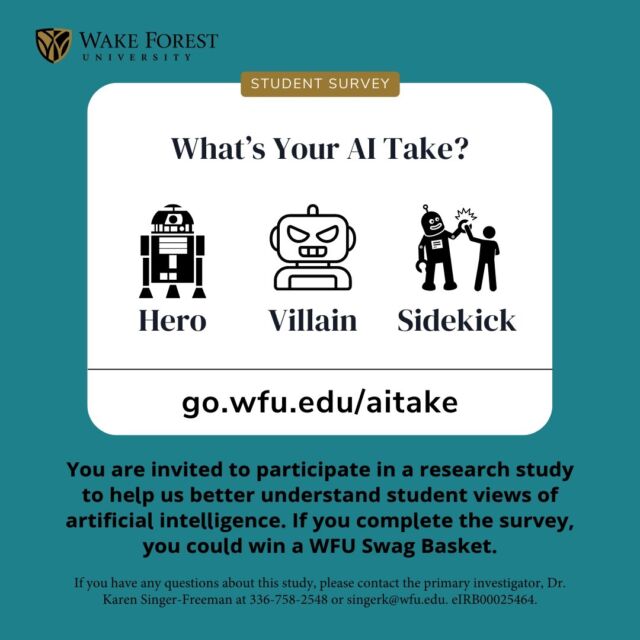
Are you curious about how Wake Forest students view AI? Please consider giving your students time in class to take our AI survey (an average 5-7 mins to complete)! go.wfu.edu/aitake
We will be sharing the results at our AI Institute 2.0 for faculty and staff on May 14th and 15th (go.wfu.edu/rj5/ to register) as well as on our website.
Students who complete the survey can enter to win a $150 WFU swag bag! 🖤 💛
Keep your eyes open for the faculty survey coming soon 📝

Just dropped! 📣 new blog post by guest writer Aishah Casseus, Executive Director of OIE & Title IX Coordinator.
This is a quick read, with a link to a series of informational video interviews featuring conversations exploring Title IX with Aishah and CAT Executive Director @betsybarre.
Read the blog post with this link: https://cat.wfu.edu/2024/02/exploring-title-ix-reporting-investigations-and-trust/
Or go straight to the video series here: https://vimeo.com/showcase/9670899


We can`t believe we`ve got another semester almost in the books! 📚 Before we take time to reflect and recharge over the winter holidays, please consider sending a note of thanks to a colleague to let them know they are making a difference!
Your note will be sent to the colleague you are thanking at the end of the semester. Please submit your notes of gratitude by December 17. 🖤 💛 ✉️
https://tinyurl.com/thankacolleague

Join us today for a fun mid-week creativity boost @wakerspace from 3:30 – 4:45 pm! 🎨
If you’ve wanted to learn more about how you might incorporate WakerSpace into your classes but have not had the chance to visit, this workshop is for you!
Facilitator Paul Whitener will cover the basic safety training required by all makers, followed by a tour. A short presentation about faculty engagements and projects will follow along with Q&A/ideation time toward the end of the session.
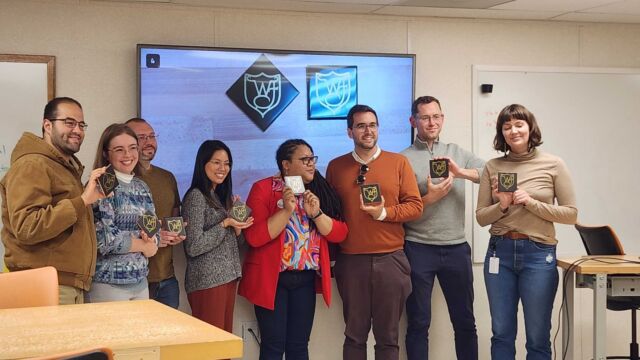
To round out the day you will get to make a ceramic tile coaster to take home, just like our wonderful New Faculty Learning Community participants in these photos!
Register at: go.wfu.edu/catworkshop
Location: WakerSpace (Building 61A, modular units in the back of Parking Lot Q between Scales & Dogwood/Magnolia)
(Photos courtesy of Dr. Kristi Verbeke)

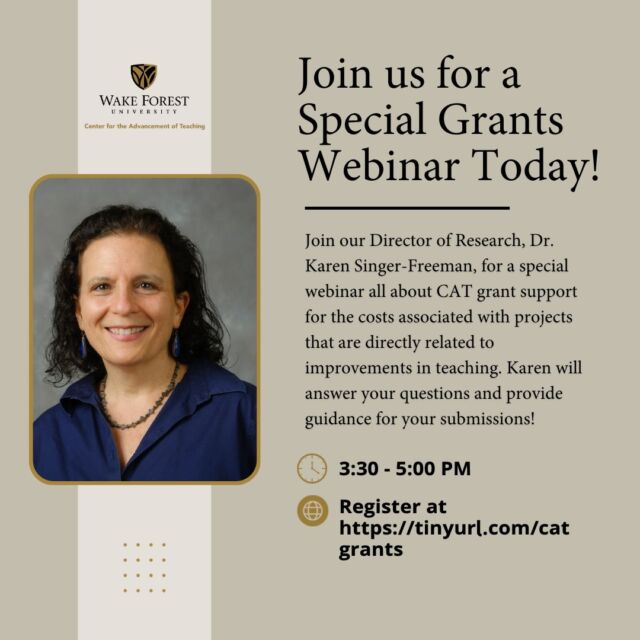
Join us this afternoon from 3:30 – 5:00 pm for a special Zoom webinar hosted by our Director of Research, Dr. Karen Singer-Freeman!
Karen will explain everything you need to know about the grant funding we offer for projects related to improvements in teaching, as well as answer your questions and provide guidance for your submissions.
Register at https://tinyurl.com/catgrants to receive the Zoom link. See you there!