B.A.- Rutgers University, 1981
M.A.- Harvard University, 1985
Ph.D.- Harvard University, 1991
Telephone: (336) 758-4986
Office:202 Carswell Hall
Email Me
Curriculum Vitae
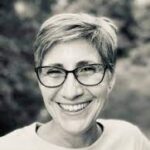
Joseph Soares
PROFESSOR

Joseph A. Soares is an Associate Professor of Sociology at Wake Forest University. His book The Power of Privilege (Stanford: 2007) was instrumental to Wake Forest’s decision to go SAT/ACT test-optional in admissions. He organized a national conference on “rethinking admissions” at Wake Forest in April 2009, sponsored by WFU’s Provost’s office, involving admissions deans and researcher from many universities including: Berkeley, Duke, Georgia, Harvard, Howard, Ohio, Princeton, Spelman, Texas, Virginia, Wake Forest, and Yale. (See: http://www.wfu.edu/provost/rethinkingadmissions/) Dr. Soares has presented his critical findings on standardized tests and college admissions at regional and national conferences of the Association of College Counselors in Independent Schools, the College Board, the Southern Association for College Admission Counseling, and to the National Association for College Admission Counseling.
An earlier book on universities in the UK, The Decline of Privilege: the Modernization of Oxford University (Stanford 1999), won a national “outstanding book of 2000” award from the American Sociological Association.
In graduate school at Harvard University, Soares was a Krupp Fellow of the Center for European Studies; a US Congress Jacob Javits Fellow; and a Visiting Fellow at Nuffield College, Oxford University. Before moving to Wake Forest, Dr. Soares taught as a Lecturer at Harvard and was an assistant and associate professor of Sociology at Yale University. For most of 2008, he was a member of the national education policy group for Barack Obama’s campaign for US President.
COURSES TAUGHT
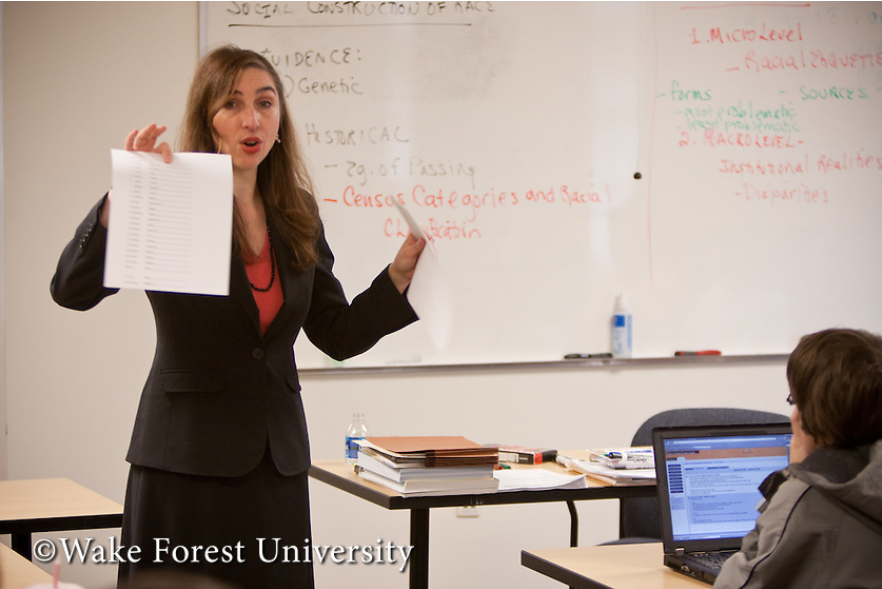
Dr. Soares regularly teaches Soc 155, an introduction to sociology that covers much of the same ground as soc 151, but from the perspective of civic engagement and cultural activities in America; also the sociology major’s required theory class, Soc 270; and two upper level seminars: Soc 334 on the sociology of education, and Soc 367 on the sociology of culture.
RECENT PUBLICATIONS
Dr. Soares is currently working on two new book projects: an edited collection of research papers and essays on “rethinking admissions” based on the Wake Forest conference; and a book on first generation college students. Expanding access to higher education has been identified as a national priority by the Obama administration. At present only 25% of adult Americans have college degrees. While the percent goes up to 39% if one looks only at the 25-34 age cohort, our record for that age group is now well behind nine other nations, placing us in the middle of the pack for post-industrial societies. If we are to expand access, approximately 60% of all new students must come from families without college educated parents.
First generation youths already comprise 45% of all undergraduates, but they are only 34% of students at four-year colleges. Their numbers at very selective colleges are even lower, representing between 5 and 10 percent of the freshman class. Access to America’s top colleges, a category that includes Wake Forest, matters because our graduates go onto earn higher incomes than graduates from lower tier colleges, and they disproportionately move on to positions in the managerial and political power elite. Just as race-sensitive admissions at very selective colleges helped to bring diversity into America’s political elites (the Obama administration is evidence of that), a first-generation-sensitive admission policy may accomplish something similar for Americans from modest to low social class backgrounds.
Dr. Soares’ motivation for this work is both scholarly and personal. He is a first-generation college graduate, born to a Portuguese-American family, living his first years on the US Air Force base in Fort Worth, Texas. Military and educational institutions in the US have long been ladders for upward mobility; this book is undertaken in the spirit of expanding some of the steps to social opportunities.
OTHER ACTIVITIES
‘Power of Privilege’ statistical appendix:
The Technical Appendix for The Power of Privilege can be found here. This appendix provides the descriptive statistics and full logistic regression models reported in abbreviated form in the book.
Website:
The Social Life of Cities, by Dr. Joseph Soares
This website offers a collection of photographs illustrating aspects of public space, collective memory, urban design, and architecture in Boston, New York, New Haven, London, Paris, and a few other cities. Since one of the central issues of urban life is the distinction between public space for cultural engagements and private space for consumer activities, there is a related series on the evolution of advertising images.Family Life:
Dr. Soares is married with two children, both of whom are bilingual in German and English. His spouse, Dr. Felicitas Opwis, has a Ph.D. in Arabic and Islamic studies from Yale University. She has published numerous articles on Islamic law and is author of the book, Maslaha and the Purpose of the Law: Islamic Discourse on Legal Change from the 4th/10th to 8th/14th Century (Brill, Boston: 2010). Currently, she is Assistant Professor of Islamic Studies at Georgetown University and Director of their Graduate Program in Arabic and Islamic Studies.
When Dr. Soares is not doing intellectual work, he spends time with his family, and tries to play a bit of blues and rock on a Fender Stratocaster.