
“We need Joy as we need air. We need Love as we need water. We need each other as we need the earth we share.”
Maya Angelou
The mission of the Environment and Sustainability Studies (ENV) Program is to prepare students to create just and sustainable futures. By leveraging the experiential learning of liberal arts education and coupling it with our vibrant professional schools, we teach students how to think across disciplinary boundaries to address environmental challenges and to act within their communities for environmental justice. We ready students to be bold and ethical leaders who respond to environmental issues using socio-environmental synthesis for evidence-based, creative, and principled action.
Upcoming Events
Check out upcoming program-related events at Wake Forest below.

see https://sustainability.wfu.edu/earth-month/ for all events from the Office of Sustainability


We have two Climate Justice Events upcoming on March 22. One is a student workshop on climate justice action and the second is a panel discussion.

Student Workshop on Climate Justice Action
Friday, March 22, 1 p.m. Greene 313. Students please register here. Spaces are limited.
with Arielle King and José Saucedo
Arielle V. King is an educator and strategist working at the nexus of environmental justice, climate optimism, and media. She is committed to making environmentalism inclusive and irresistible for all with a background in civil rights law, environmental racism analysis, and community engagement. As a consultant, Arielle shares her expertise on environmental justice policy, media, and storytelling at institutions across the United States. With a BA in Environmental and Sustainability Studies, a Master’s in Environmental Law and Policy, and a JD focused on civil rights law and environmental justice, Arielle is well-equipped to drive change and infuse justice into any program she supports.
José Saucedo is a Regional Community Field Organizer with five years of organizing experience, working at PowerUp NC under the North Carolina League of Conservation Voters Foundation. José graduated Cum Laude with his Bachelor of Arts in Communications and Media Studies from Winston-Salem State University, using his skills in communication he advocates for residents by helping educating and organizing frontline communities on environmental justice issues that are prominent in their communities. José is a champion in Winston-Salem not only for the environment but for the City of Winston-Salem as a whole, serving as Vice President of The Delta Sigma Chapter of Phi Beta Sigma Fraternity, Inc., as well as a 2022 Recipient of The Martin Luther King Young Dreamers Award. In his free time, José likes to take photos, work on his car, and play billiards with his father.
Climate Justice Panel Discussion with Justice/Scholar Activists Leah Thomas, Alexis Raeana, José Saucedo and Arielle King. Open to all.
Friday, March 22 4:30 p.m.
Forsyth County Central Library, 660 W.5th Street, Winston-Salem NC
Reception afterwards at Foothills, 638 W. 4th Street, Winston-Salem NC

Students are welcome. Look out for an email to sign up for shuttle transportation or email hamiltjk@wfu.edu
In addition to the speakers mentioned above, the panel will also consist of:
Leah Thomas is a celebrated environmentalist, founder of the non-profit, Intersectional Environmentalist, and author of The Intersectional Environmentalist: How to Dismantle Systems of Oppression to Protect People + Planet. She has been recognized for her work in outlets like Harper’s Bazaar, W Magazine, CNN, ABC News, and NBC, among others, and has been honored on lists including EBONY Power 100, TIME100 Next, and INSIDER’s Climate Action 30. She is based in Los Angeles, CA.
Alexis Raeana Jones is an enrolled member of the Lumbee Tribe of NC, from rural southeastern NC. The former Miss Lumbee is a graduate of the University of North Carolina at Wilmington (19) where she studied Environmental Science and currently resides. Jones is the Owner of Alexis Raeana, LLC where she is a professional vocalist, makeup artist, model, environmental/indigenous activist/organizer, while buying land back one plot at a time. Alexis also serves as the Eastern Regional Organizing Manager for Down Home NC.
We are grateful for the support of the Provost Fund for Academic Excellence and the climate justice committee who planned this event, all of whom teach environmental justice or were involved with an earlier initiative on climate anxiety or both. They are Rowie Kirby-Straker (Communication), Francisco Gallegos (Philosophy), Alyse Bertenthal (Law School), Crystal Dixon (Health and Exercise Science), Steve Smith (Env & Sust Studies), Scott Schang (Law School), Melanie Harris (African American Studies & Divinity School), Eric Stottlemyer (English and Office of the Dean of the College), Cat Mizzi-Orrell (formerly of the Office of Sustainability and now at the NGO Forsyth Futures), Deb Marke (Office of Community and Civic Engagement), and Julie Velásquez Runk (Env & Sust Studies)
News
- Velásquez Runk published in Forest History Today
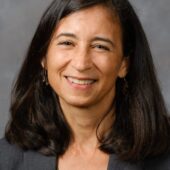 Dr. Julie Velásquez Runk, Director, Professor & Weigl Fellow of Environment and Sustainability Studies, has published “Rosewood: Centuries of Global Exploitation” in Forest History Today.
 - Climate Risk Mapping
 by Ella Gay (’24). I was initially drawn to this internship because of the environmental research aspect that it seemed to offer. As a biology major interested in research and an environmental studies minor looking to explore the effects of climate change, it seemed like a perfect fit. I feel like my three years of […]
 - Bioregionalism addresses climate change, environmental justice, colonialism, and globalization.
 By Luis M. Bou (’25). Thanks to my summer fellowship, I was able to research this summer in Adjuntas, Puerto Rico about bioregionalism and how it addresses the struggles and crises that humanity is living right now in the midst of climate change. I was able to navigate the ideas of re-learning, live-in-place, re-inhabitation, and […]
 - Bat work in the Peruvian Amazon
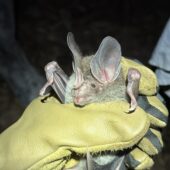 By Matthew Kline (’24). This past summer, I spent over seven weeks at a research station in the Peruvian Amazon gaining hands-on research experience. Most of my work was with bats, but I was also able to assist the bird, herp, caiman, and mammal teams with their research. I learned how to set up and […]
 - Environmental conservation work with Mote Marine Laboratory in Sarasota, Florida
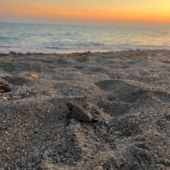 by Hunter Szewczyk (’24). I was an intern for Mote Marine Laboratory in Sarasota, Florida doing environmental conservation work. I worked with the Sea Turtle Research and Conservation Program, where I was on the morning beach patrol that tags, verifies, and excavates sea turtle nests on the beach. We responded to calls from volunteers that […]