


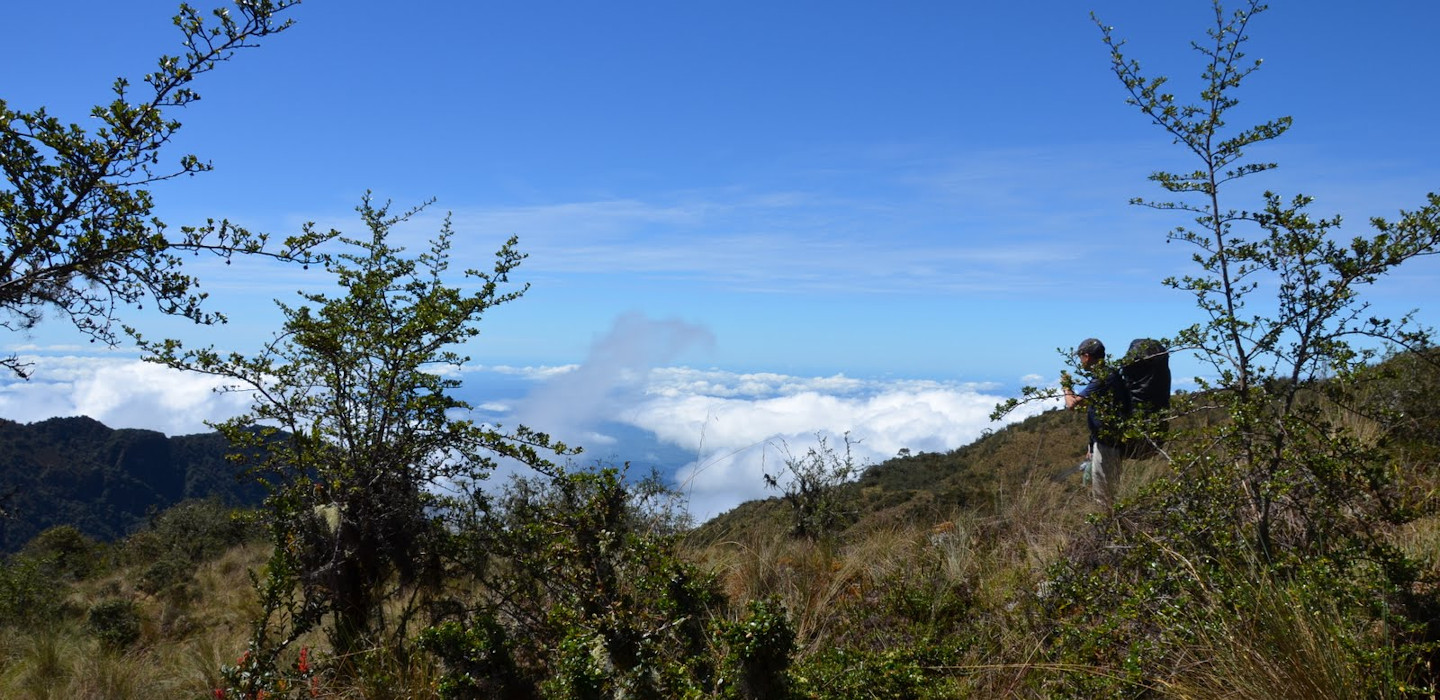


The Teacher-Scholar Model
Our faculty members represent the teacher-scholar mission of a broad and integrative education in biological sciences. Faculty in our department conduct research in a variety of diverse areas of research. Undergraduates in our department pursue courses of study towards a B.A. in Biology, B.S. in Biology or B.S. in Biochemistry and Molecular Biology. Additionally, our department is affiliated with the Environmental Program and the Neuroscience Program. Our department is also home to graduate studies programs towards a Ph.D. in Biology and M.S. in Biology.
Partnerships
The Department of Biology also partners with several other campus teaching and research centers, including the Center for Molecular Signaling, the Center for Energy, Environment, and Sustainability, the Center for Bioethics, Health, and Society, and the Structural and Computational Biophysics Certificate Program.
Come Join Us!
Interested undergraduate students and graduate students for all our degree programs are encouraged to contact program directors or individual faculty mentors with whom you share interests. We are excited to welcome you as colleagues in our teacher-scholar community.
Connect and get the latest updates
Like us on Facebook,
Follow us on Twitter,
Visit us on Instagram,
View us on Flickr,
Watch us on YouTube, and
Join us on LinkedIn
Wake Forest University Indigenous Land Acknowledgment
“This statement honors the land on which Wake Forest University now resides and the land on which the original campus resided. This land served for centuries as a place for exchange and interaction for Indigenous peoples, specifically Saura (saw-ra), Catawba (ka-tah-buh), Cherokee (chair-o-kee), and Lumbee (lum-bee) in this location and Shakori (shu-kor-ee), Eno (ee-no), Sissipahaw (sis-suh-pa-hah), and Occaneechi (oak-a-nee-chee) in the original campus location. Today Wake Forest continues to be a place of learning and engagement for Indigenous students, faculty, and staff regionally, nationally, and globally.”
© 2022 Wake Forest University All Rights Reserved.