Art Department News
- Studio Honors Candidate Clayton Bi (’24) Lao Lao Exhibition
 Exhibition runs May 13 – May 20 at Hanes Mezzanine Gallery. See more.
 - Studio Honors Candidate Sabrina Bakalis (’24) Entangled Existence Exhibition and Reception
 Exhibition runs April 25 – May 5 at Hanes Mezzanine Gallery. Reception on Thursday, April 25 from 5:30-7:30pm at Hanes Mezzanine Gallery. See more.
 - Fall 2024 Course Posters
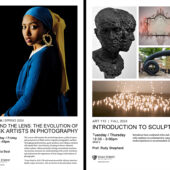 Fall 2024 Courses: Art History | Studio
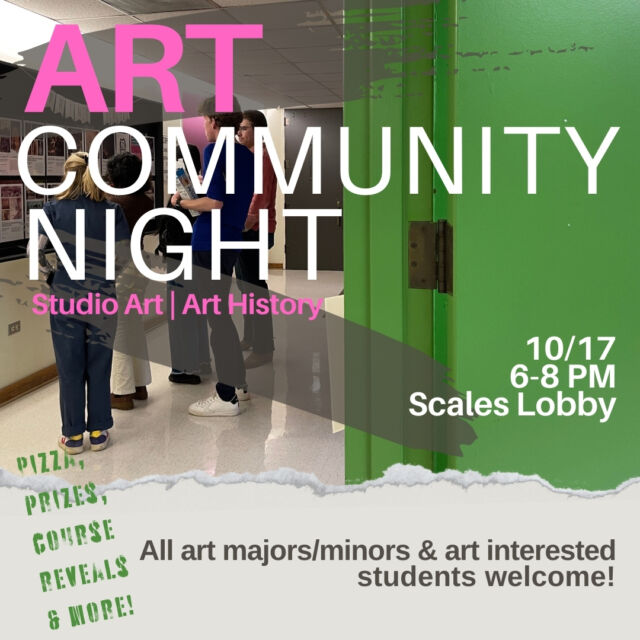
 - Art Community Night
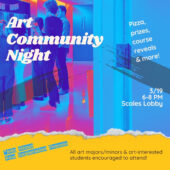 All art majors/minors and art-interested students are encouraged to attend the Art Community Night on Tuesday, March 19, from 6-8pm in the Scales Lobby. Here, students will learn information regarding the new registration process on Workday. There will be pizza, […]
 - Visiting Alum – Livi Andreini (’20), Textile Conservator at the University of Amsterdam, and Incoming Textile Conservation Fellow at the Los Angeles County Museum of Art (LACMA) – gives talk on March 18, 4:00 pm & networking coffee chat March 19, 11 am-1 pm
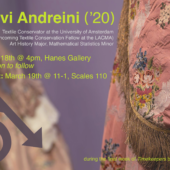 Students can learn about her experiences abroad and perspectives on getting a job after graduation! Network with Livi! There are two events scheduled around her visit: • Talk on Monday, March 18th, @ 4:00 in Hanes Gallery, with a reception to follow • Coffee chat for […]
Department Events
Studio Honors Candidate Exhibition Reception: Sabrina Bakalis (’24)
April 25 / 5:00-7:30pm / Hanes Gallery Mezzanine
Student Filmmaking & Video Art Screening
May 2 / 5pm / Scales 102
Exhibitions